A Parent's Guide to Night Lights: How to Pick One That Helps Kids Sleep
Share
Every parent knows the 2am routine: a small voice calls out, you stumble down a dark hallway, stub your toe on a toy you’ve asked to be put away four times, and by the time you’ve found the light switch, everyone is properly awake. A good night light fixes most of that — but walk down the baby aisle and you’ll find everything from $5 plug-ins to $90 “sleep trainers”, all promising miracles.
Here’s what actually matters when choosing a night light for kids — what the sleep science says about light and children, and what we’ve learned from Australian families using ours.
Why kids genuinely benefit from a night light
- Fear of the dark is developmental, not dramatic. It usually appears around age two and peaks between four and six — exactly when imagination outruns reasoning. A soft glow keeps the room familiar when they stir at night.
- Toilet training happens at night too. A lit path to the bathroom means fewer accidents, and fewer full-volume call-outs for help.
- You need to see without waking them. Checking on a sleeping child by phone torch is a gamble. A dim, constant glow lets you peek in without reaching for the big light.
The light-colour rule most night lights get wrong
Light colour affects melatonin — the hormone that makes us sleepy. Cool, blue-white light (the colour of phone screens and bright kitchen downlights) suppresses it; warm, dim light has far less effect. For a child’s bedroom that means one simple rule: warm and dim beats bright and white.
Two practical take-aways:
- Choose a night light with a warm, soft glow rather than a stark white beam. If it’s dimmable, use the lowest setting that still does the job.
- Position matters as much as colour. Place the light low and away from the bed — near the door, or along the path they walk — so it lights the floor, not their pillow.
Always-on or motion sensor? It depends on the job
This is the decision that actually changes which light you should buy.
In the bedroom: a constant soft glow
For a child who’s scared of the dark, the light’s job is reassurance — it has to be there every time they open their eyes. An always-on lamp at its dimmest warm setting is the right tool here. A cordless rechargeable lamp like our portable colour-changing lamp works especially well: kids pick their own colour as part of the bedtime routine (you then dial it down to a warm low glow), and because it’s rechargeable there are no cords anywhere near the bed.
In the hallway and bathroom: motion sensor
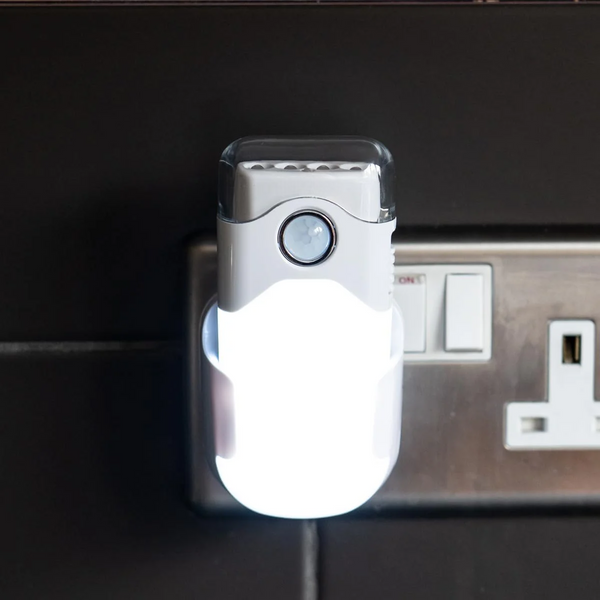
The path to the toilet doesn’t need light all night — only when small feet hit the floor. A motion sensor night light switches on as they walk past and off again soon after, keeping the house dark the rest of the time. And because it lives in the hallway rather than the bedroom, it can’t disturb anyone’s sleep by triggering.
Weighing these up against app-controlled smart bulbs? We’ve written an honest comparison of smart lights vs motion sensor night lights.
The blackout factor Australian parents forget
A storm-season blackout is an inconvenience for adults — for a four-year-old woken by sudden total darkness, it’s genuinely frightening. A power-failure night light has a built-in battery and switches itself on the instant mains power drops, so the hallway is already lit before anyone has time to panic. Ours doubles as a removable torch, which means you’re not hunting for your phone while a small person calls your name.
The safety checklist
- Cool-touch LEDs. Older incandescent night lights ran hot enough to burn curious fingers. Modern LEDs stay cool all night.
- No trailing cords near cots or beds. Go plug-in (socket height, out of reach) or cordless rechargeable.
- Mind the button batteries. Loose button batteries are one of the most serious household hazards for under-fives — serious enough that Australia introduced mandatory safety standards for them. USB-rechargeable lights sidestep the issue entirely.
- Australian certification. Anything that plugs into a wall socket should be certified for Australian electrical standards. Every Glomix light is.
Our picks for kids’ rooms and hallways
- Power Failure Motion Sensor Night Light — the hallway anchor. Motion-activated for night-time toilet trips, automatic blackout backup, and a removable torch. The light most Australian families start with.
- Portable Colour-Changing Lamp — the bedside pick. Kids choose their colour at bedtime, you set it to a dim warm glow, and there are no cords near the bed. Recharges by USB.
- 3-in-1 Multifunction Night Light — for older kids and bigger spaces. Motion sensor night light, power-failure backup and a removable torch bright enough for reading under the covers (we won’t tell).
Browse the full range of night lights for Australian homes here.
Frequently asked questions
Is it OK for my child to sleep with a night light on?
Yes — as long as it’s dim, warm-toned and positioned away from their face. For an anxious child, the reassurance of a soft glow does far more good than the tiny melatonin trade-off does harm.
What colour night light is best for sleep?
Warm tones — soft amber through warm white. Avoid cool blue-white light at bedtime; it’s the most melatonin-suppressing colour and belongs in kitchens, not bedrooms.
Will a motion sensor light wake my child?
Not if you place it right. In the hallway or bathroom it only triggers when someone is already up and walking. For inside the bedroom itself, use a constant dim lamp instead — that’s the wrong room for a motion sensor.
Do night lights cost much to run?
No. An LED night light costs cents per year to run, and rechargeable models typically go weeks between charges. The days of warm, power-hungry globes are long gone.
The bottom line
Warm and dim in the bedroom, motion-sensing in the hallway, and blackout backup for storm season. Get those three right and the 2am routine becomes: child pads down a softly lit hall, goes back to bed, and you never even wake up. That’s a lot of sleep for a $30 light.
Shop night lights or email us — tell us your child’s age and room setup and we’ll recommend the right fit.